
Komodo Trip FAQs: The Ultimate Guide to Visiting Real-Life Dragons!
Planning an adventure to see the world’s largest living lizards? A trip to Komodo National Park in Indonesia is like stepping straight into Jurassic Park!
If you dreaming of this epic vacation, or helping you to plan the ultimate adventure, you probably have a ton of questions. Here are the answers to the most frequently asked questions (FAQs) about taking a trip to see the Komodo dragons!
1. Where exactly do we go to see them?
You can't just fly directly onto a dragon island! First, you have to fly into a town called Labuan Bajo on Flores Island in Indonesia. This town is the main gateway. From there, you jump on a boat to explore Komodo National Park, which is made up of three main islands: Komodo Island, Rinca Island, and Padar Island.
2. What is Labuan Bajo, and how does it connect to Komodo Island?
Labuan Bajo is a bustling harbor town located on the large island of Flores. Think of it as your base camp! You cannot fly directly onto Komodo Island because it is a protected national park. Instead, you fly into the airport in Labuan Bajo, stay in a hotel or board a boat there, and then sail out into the ocean to see the dragons.
3. Is it actually safe to visit the dragons?
Yes, it is totally safe—but only if you follow the rules! Komodo dragons are wild, venomous apex predators. Because of this, you are never allowed to walk around the islands alone. You will always be accompanied by an official park ranger. These rangers carry a long, forked wooden stick. If a dragon gets too curious, the ranger uses the stick to gently push against the dragon's neck to keep it back.
4. How big do they actually get?
They are absolutely massive! An adult Komodo dragon can grow up to 10 feet (3 meters) long and weigh more than 150 to 300 pounds (70 to 135 kg). That means a single dragon can be longer than a sedan and heavier than two average-sized teenagers combined!
5. Are Komodo dragons venomous?
Yes, they are! For a long time, scientists thought Komodo dragons killed their prey using nasty bacteria in their spit. But in 2009, researchers discovered that they actually have venom glands in their lower jaws. Their venom stops blood from clotting, causing their prey to go into shock and bleed out. Yikes!
6. What do they eat?
Komodo dragons are carnivores (meat-eaters) and apex predators, meaning they are at the top of the food chain. They eat almost anything they can catch, including:
- Deer and pigs (their favorite)
- Water buffaloes
- Birds and rodents
- Even other, smaller Komodo dragons! (Yes, they are cannibals sometimes).
7. How fast can they run?
Don't let their bulky bodies fool you—Komodo dragons can sprint up to 12 mph (20 km/h) in short bursts. While you could probably outrun one in a long-distance race, they are incredibly fast when they ambush their prey.
8. What else is there to do besides looking at lizards?
Honestly, the dragons are only half the fun. The islands around Labuan Bajo have some of the most viral, Instagram-worthy nature spots on Earth:
- Pink Beach: The sand is actually pink! This happens because tiny red organisms living in the coral mix with the white sand.
- Padar Island: You hike up a steep volcanic hill to see a view of three different colored beaches (one pink, one black, and one white) all at once.
- Manta Point: You get to jump into the ocean and snorkel right alongside giant reef manta rays that are as big as a double bed!
- Taka Makassar: This is a tiny, crescent-shaped sandbar in the middle of the sea. It is only visible during low tide. It looks like your own private tropical island.
- Kelor Island: This is usually the first or last stop on your boat trip. It features a short but very steep hill. Once you scramble to the top, you get a beautiful panoramic view of the blue ocean and nearby islands.
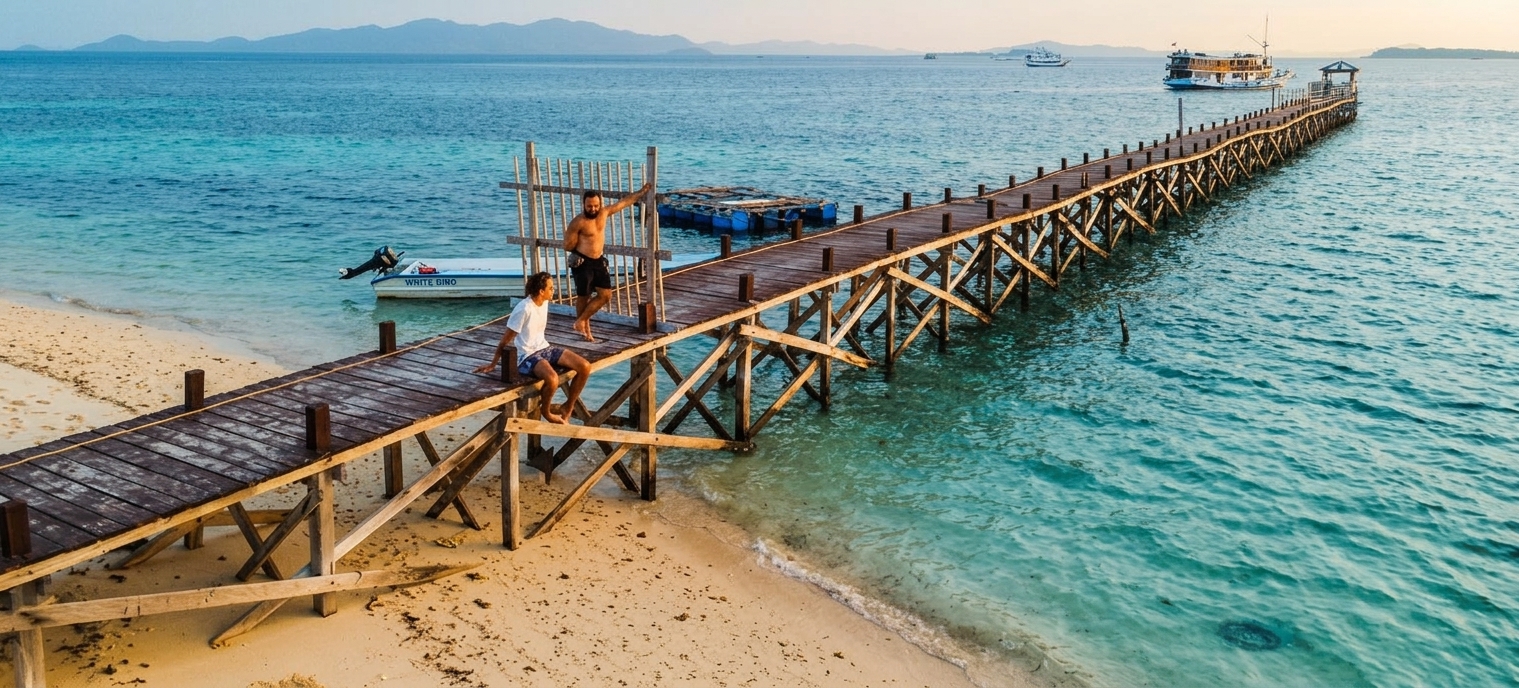
- Manjarite: This is a quiet, peaceful bay with a long wooden pier. It is one of the best places for beginner snorkelers. The water is super calm, clear, and filled with colorful clownfish and sea stars.
- Siaba Island: This spot is famously known as "Turtle City." The ocean floor here is covered in lush sea grass. Huge green sea turtles love to hang out here to eat and rest, making it easy to swim right alongside them.
- Kalong Island: This island is covered in thick mangrove forests. At sunset, thousands of giant fruit bats fly out of the trees all at once. They fill the orange sky as they head to the mainland to look for food. It is an unforgettable sight!
9. Where do we sleep during the trip?
You have two awesome choices, and both are super fun:
- The Liveaboard Boat (Highly Recommended): You spend 2D1N to 3D2N living on a traditional wooden boat called a Phinisi. You eat, sleep, and watch sunsets from the deck while sailing from island to island. It’s like a floating hotel!
- Hotel Stay: You stay at a cool resort in Labuan Bajo with a pool and take fast speedboats out to the national park every morning.
10. When is the best time to go?
The absolute best time to visit is during the dry season, which runs from April to September. The weather is hot and sunny, the ocean is calm, and the water is crystal clear for snorkeling.
- Insider Tip: If you visit in July or August, it is the dragons' mating season. They might be a bit harder to find because they hide deep in the jungle looking for a mate!
11. How much time do we need to spend in Labuan Bajo?
You should plan to spend a total of 3 to 4 days in the area. How you divide your days depends on how you want to explore the park:
Day tour by Speedboat. If you choose a 1-day speedboat tour, you must arrive in Labuan Bajo the night before. Speedboats leave at dawn, and no morning flights arrive early enough to catch them.
Speedboats leave the harbor incredibly early (around 6:00 AM). Flights arriving from Bali or Jakarta do not land early enough to catch a same-day departure. However, you can fly out of Labuan Bajo on the same evening after your speedboat returns (around 4:00 PM – 5:00 PM).
2D1N Live on board. If you are joining the 2-day, 1-night boat tour, it is advisable to stay overnight in Labuan Bajo after the tour concludes. You can arrive in Labuan Bajo on a morning flight, as pickups begin at 9:00 AM. However, the tour typically ends between 5:00 PM and 6:00 PM on the second day, weather and sea conditions permitting; to be safe, it is best to book an overnight stay in Labuan Bajo.
The Liveaboard Style (3 Days, 2 Nights): You land at the airport, head straight to the harbor, and board a boat. You spend 0 nights in a town hotel and 2 nights sleeping in a cabin out at sea. It is the ultimate island-hopping experience! For the 3-day, 2-night liveaboard program, you do not need to stay overnight in Labuan Bajo. You can arrive on a morning flight on the first day and depart on a late afternoon or evening flight (5:30 PM or 7:15 PM). Tour pick-up begins at 9:00 AM, and you will return around 2:00 PM on the third day.
12. Which trip is the best: 1 day, 2 days, or 3 days?
The 3-Day, 2-Night (3D2N) liveaboard trip is the absolute best option.
Here is how the choices stack up so you can pick the best fit for your schedule:
The 3-Day Trip (The Winner): This is the classic Komodo experience. It gives you a relaxed, unhurried pace. You get to visit every famous spot: hike Padar Island at sunrise, walk on Pink Beach, see the dragons, track giant manta rays, and swim alongside massive green sea turtles at Siaba Island.
The 2-Day Trip (A quick taste of the ocean): This is a quick overnight option, usually best done as a private charter boat. You get to experience sleeping on the water and seeing the flying foxes at sunset, but the schedule is very rushed. You have to skip a few great snorkeling spots to make it back to land on time.
The 1-Day Speedboat Trip (Best for tight schedules): This is a fast, action-packed sprint. You ride a high-powered speedboat to zoom between the core highlights like Padar Island, Pink Beach, and the dragons in just a few hours. It is highly efficient, but you will miss the magical sunsets at sea and sleeping under the stars.